
Minecraft block palettes: 7 combinations from real builds
Seven Minecraft block palettes that work, measured from real builds: clean modern, warm modern, medieval stone, alpine timber, coastal, dark fantasy and Japanese.

A block palette is the handful of blocks a build is made from. Get it right and even a simple shape looks good; get it wrong and no amount of detail saves it. The good news: palettes follow a few simple rules, and you can borrow them from builds that already work.
Every palette below is taken from a real X-Builds build. The counts are the actual number of each block in that build, and the bar shows how much of the palette each block makes up, so you can see not just which blocks go together but in what amounts.
How a palette works
- One main block covers most of the build: the walls. Pick it first, and pick something that looks good in large areas.
- One or two supporting blocks of a similar colour add texture: mossy and cracked stone bricks next to plain ones, or two woods of a similar tone.
- One contrast block frames the shape: a darker wood for beams and trim, or a white frame round darker walls. Contrast in lightness matters more than contrast in colour.
- An accent, used sparingly: a coloured roof, banners, a glowing block. A little goes a long way.
- Keep it to five or six blocks for the structure itself. Detail blocks (stairs, slabs, walls, lanterns) of the same materials do not count against that.
Clean modern
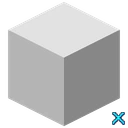 White Concrete×1,05723%
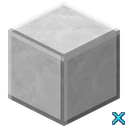 Polished Diorite×1,06023%
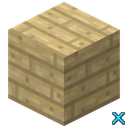 Birch Planks×73216%
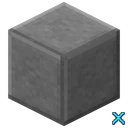 Smooth Stone×60613%
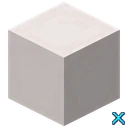 Block of Quartz×44310%
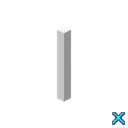 Glass Pane×65214%
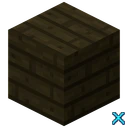 Dark Oak Planks×912%
White concrete and polished diorite are the two biggest blocks, in almost equal amounts, so the white never looks flat. Smooth stone and quartz add two more shades of near-white, birch adds the softest possible wood, and glass panes do the rest. Dark oak, used in small amounts for slats, is the only thing that is not pale, and that is what makes it stand out.
Warm modern
- White Concrete×60025%
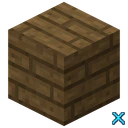 Spruce Planks×43718%
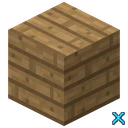 Oak Planks×75932%
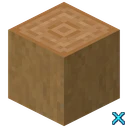 Stripped Oak Log×26411%
- Smooth Stone×1727%
- Glass Pane×1496%
The same white concrete as the villa, but here it is a frame, not the walls. Spruce fills the walls, stripped oak logs make pillars, and oak planks cover the deck. The result is still modern, but it feels like a home rather than a gallery. If a white build looks cold, this is the fix: let one warm wood take over the walls.
Medieval stone
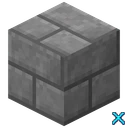 Stone Bricks×3,73662%
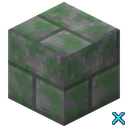 Mossy Stone Bricks×64811%
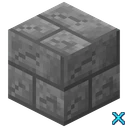 Cracked Stone Bricks×4888%
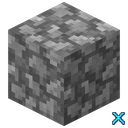 Cobblestone×5579%
- Spruce Planks×5439%
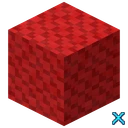 Red Wool×711%
The castle's walls are mostly stone bricks, broken up with mossy and cracked stone bricks and cobblestone so they look centuries old instead of freshly built. Spruce is the one wood, for the pyramid roofs and the timber work, and red wool for the banners is the only real colour. When you do this yourself, scatter the mossy and cracked bricks at random, a little more near the ground and around water, where moss would really grow.
Alpine timber
- Stone Bricks×63625%
- Cobblestone×41916%
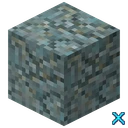 Andesite×27811%
- Spruce Planks×50920%
- Dark Oak Planks×40316%
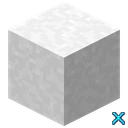 Snow Block×33913%
Heavy stone at the bottom, timber above, snow on top: the classic mountain-house order. Stone bricks, cobblestone and andesite mix into a rough, natural base; spruce and dark oak give two tones of timber, the darker one for the steep roofs. Snow blocks tie the house to the landscape around it.
Coastal red and white
- White Concrete×37835%
 Red Concrete×33531%
- Stone Bricks×11611%
- Andesite×908%
- Spruce Planks×878%
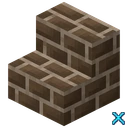 Brick Stairs×717%
Two strong colours in almost equal amounts, red and white concrete, make the lighthouse's stripes. Everything else steps back: stone bricks and andesite in quiet greys, a little spruce, and brick stairs for the cottage roof, which echoes the red without competing with it. When two colours are loud, keep the rest of the palette calm.
Dark fantasy
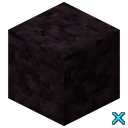 Blackstone×1,64340%
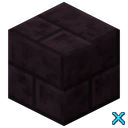 Polished Blackstone Bricks×70817%
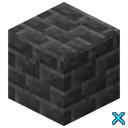 Deepslate Tiles×64416%
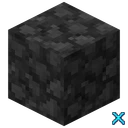 Cobbled Deepslate×2987%
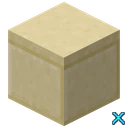 Cut Sandstone×55513%
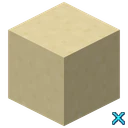 Smooth Sandstone×3047%
Four dark blocks (blackstone, polished blackstone bricks, deepslate tiles and cobbled deepslate) make up most of the dragon, mixed so the scales have texture: dark blocks only look interesting when their textures change. Cut and smooth sandstone for horns, spikes and claws are the contrast: pale against dark, so the shape reads from far away.
Japanese
- Red Concrete×1720%
 Black Concrete×1214%
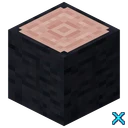 Cherry Log×45%
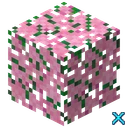 Cherry Leaves×2226%
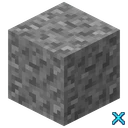 Gravel×2731%
- Stone Bricks×45%
A torii gate needs only red and black: red concrete for the posts and beams, and a black lintel across the top. Cherry logs and cherry leaves bring the soft pink that says Japan at once, and gravel and stone bricks keep the path and lanterns neutral. The smallest palette here, and proof that three or four well-chosen blocks are enough.
Make your own
- Start from your main block and look at it next to candidates in a creative world, in daylight. Blocks look different in the inventory.
- Squint at the build. If the shape disappears, you need more contrast in lightness, not more colours.
- Borrow from the biome. A palette that uses the blocks around the build (spruce and stone in a taiga, sandstone in a desert) always looks like it belongs.
- Test on a small wall before committing to a whole house.
Every build in the catalogue lists its full set of blocks with counts. Open any build to see its complete palette, or start with our house ideas.
Every build comes with its exact block list and a picture for every step. Free builds open in your browser, no account needed.
Pictures and icons: X-Builds; textures REFI by MysticTempest, CC BY-SA 4.0 (credits). Builds are original X-Builds designs; sizes, counts and times come from each build’s guide.
Keep reading
 Ideas · 6 min readMinecraft house ideas: 10 houses to build, step by stepTen Minecraft house ideas, from a cozy fishing hut to a modern villa and a snowy mountain chalet, each with its exact block list and a picture for every step.
 Ideas · 4 min readMinecraft survival base ideas: 8 bases worth buildingEight Minecraft survival base ideas: a hidden snow bunker, an underground home, an island tree base, a castle and more, each with exact blocks and step pictures.